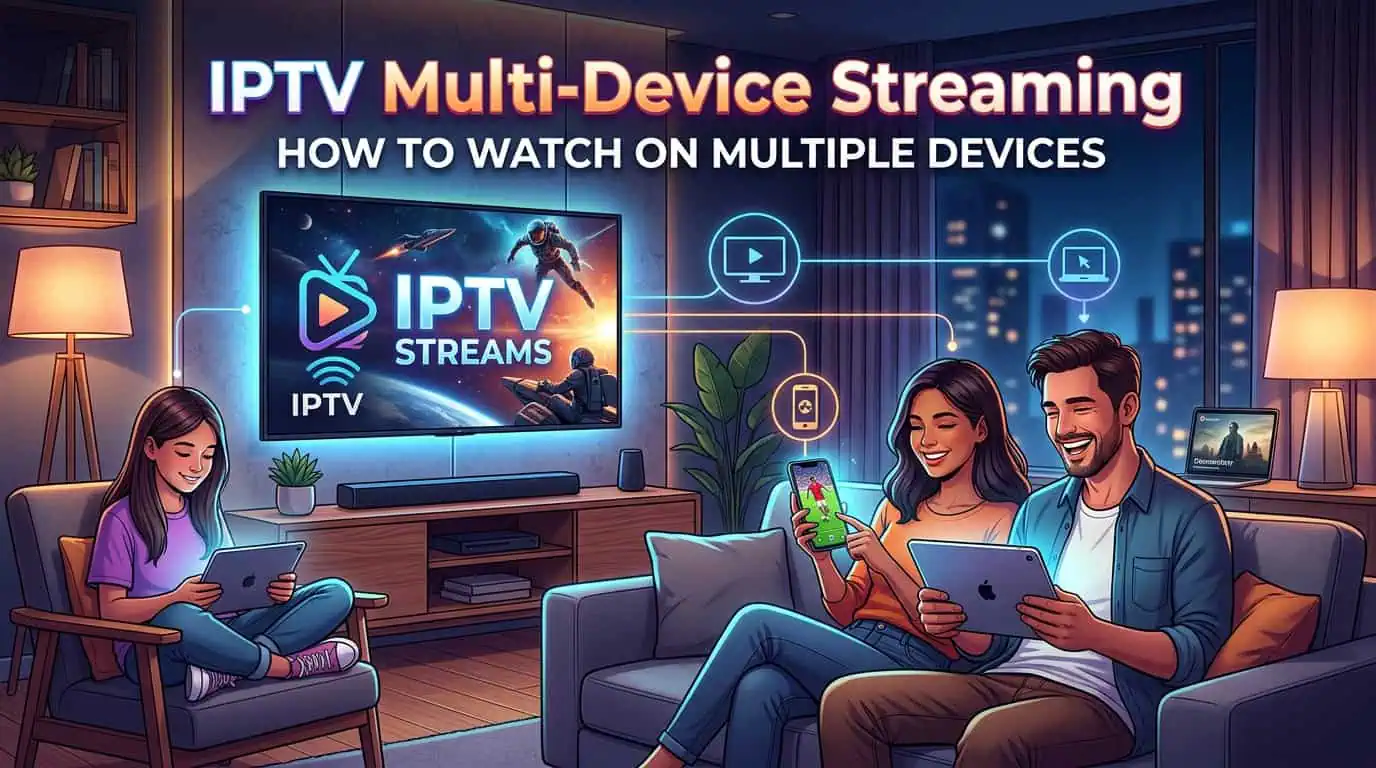
IPTV generally provides more device flexibility because compatible services can work through different apps and streaming devices. Depending on the service, you may be able to watch IPTV on a Smart TV, streaming stick, Android device, phone, tablet, or computer. Your available options depend on the provider and supported IPTV player. If you are comparing compatible apps and viewing setups, our IPTV player guide can help you understand what to check before choosing a setup.
Cable TV is traditionally centered around the provider's equipment and the television connection installed at your home. Some modern cable companies also provide apps and online viewing options, which reduces the difference.
If watching television across different devices is important to you, check the provider's supported devices before subscribing.
What Is the Difference Between IPTV and Cable TV?
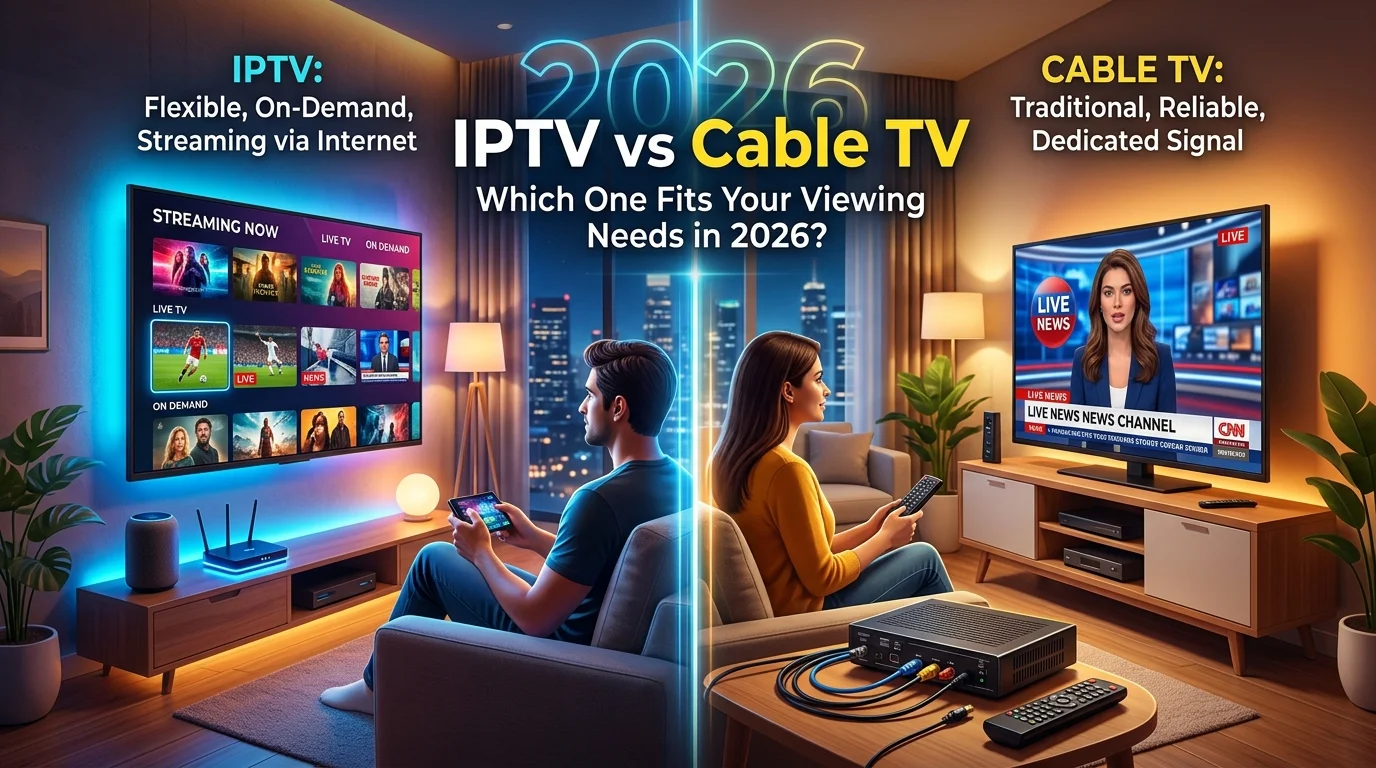
The main difference is how the television signal reaches your screen. Cable TV uses a dedicated transmission network, commonly through coaxial or fiber infrastructure, while IPTV delivers television through IP-based networks.
With IPTV, viewers normally use a compatible Smart TV, streaming device, phone, tablet, computer, or IPTV player. Cable TV usually relies on equipment supplied by the cable operator.
This difference affects setup, flexibility, internet requirements, and how you watch TV around your home.
IPTV vs Cable TV: Channel Selection
IPTV can provide access to a wide range of channels, including international programming, depending on the provider and its content rights. Cable TV usually offers a channel lineup determined by the operator and the region it serves.
For viewers who mainly watch local channels, regional news, or specific cable networks, a traditional cable package may provide a familiar lineup. Viewers looking for international programming may find IPTV services more flexible, although channel availability varies by provider.
The important point is to check the actual channel list rather than choosing a service based only on a large advertised channel number.
IPTV vs Cable TV: Picture Quality
Both IPTV and cable TV can support HD and, where available, 4K content. The final picture quality depends on the source, service, equipment, and network conditions.
IPTV relies on your internet connection. If your connection is stable and has enough capacity for the stream, HD or 4K IPTV can provide a good viewing experience. A congested or unstable connection can cause buffering or quality changes.
Cable TV does not normally depend on your home internet connection for its television signal. That can make it more predictable when your broadband connection is experiencing problems.
Does IPTV Need Internet?
Yes. IPTV depends on an IP network to deliver television content, so your internet or managed broadband connection is an important part of the viewing experience.
Cable TV does not require your internet connection to deliver its traditional television signal. This gives cable an advantage when broadband service is unreliable.
However, a stable internet connection is already important for many modern households because of video streaming, gaming, video calls, and other online services. For these users, IPTV can fit naturally into an existing connected-home setup.
Which Is More Flexible: IPTV or Cable TV?
IPTV generally provides more device flexibility because compatible services can work through different apps and streaming devices. Depending on the service, you may be able to watch IPTV on a Smart TV, streaming stick, Android device, phone, tablet, or computer. Your available options depend on the provider and supported devices. Choosing the right IPTV player can also make it easier to manage playlists, EPG information, and navigation on compatible devices.
Cable TV is traditionally centered around the provider's equipment and the television connection installed at your home. Some modern cable companies also provide apps and online viewing options, which reduces the difference.
If watching television across different devices is important to you, check the provider's supported devices before subscribing.
IPTV vs Cable TV: Setup and Equipment
IPTV can often be configured through a compatible app or IPTV player without installing a traditional cable line. The exact process depends on the service and device, so checking the available IPTV setup information before getting started can help you understand the required equipment and steps.
Cable TV normally requires a connection from the operator and may involve a set-top box or other supplied equipment.
This makes IPTV attractive to people who prefer software-based setup and already own compatible streaming hardware. Cable can be more convenient for viewers who want a provider-managed television system.
What About Cost?
The cost of IPTV vs cable TV depends heavily on the provider, package, region, equipment fees, taxes, and additional services.
Cable companies may bundle television with internet, phone, or other services. IPTV pricing also varies considerably between providers and packages.
A low monthly price should not automatically be treated as better value. Check the channel lineup, supported devices, streaming quality, customer support, contract terms, and content authorization. Reviewing available IPTV packages can help you compare what is included before choosing a plan.
Before choosing an IPTV subscription, compare the total cost with what you actually watch.
IPTV vs Cable TV for Sports and Live Events
Sports viewing requires extra attention because channel availability and streaming reliability can vary.
Cable services may have established agreements for local and regional sports networks. IPTV services may offer international sports channels depending on their content rights and market.
Live-event delay can also differ between delivery systems. If you regularly watch sports while following live social media updates, even a small delay may matter.
The safest approach is to check whether the service legally carries the specific sports channels or events you want to watch.
Which One Fits Your Viewing Habits?
There is no single option that fits every household.
IPTV may suit you if you want flexible device support, internet-based viewing, international programming, and a software-focused setup.
Cable TV may suit you if you prefer a provider-managed connection, rely heavily on local channels, or want television that does not depend on your household's internet connection.
Your decision should therefore start with your viewing habits rather than simply asking which technology is newer.
IPTV vs Cable TV: Questions to Ask Before Choosing
Do I Have a Stable Internet Connection?
If you plan to use IPTV, check whether your broadband connection is reliable enough for the video quality you want.
Which Channels Do I Actually Watch?
Write down your essential channels before comparing packages. A service with thousands of channels is not useful if it does not include the content you regularly watch.
Which Devices Do I Want to Use?
Check whether the service supports your Smart TV, streaming device, phone, tablet, or computer. You should also confirm whether your preferred IPTV player is supported.
Do I Need Local Channels?
If local news, regional programming, or local sports are important, confirm their availability before switching from cable.
Is the IPTV Content Properly Authorized?
IPTV is a delivery technology, but individual services can have different licensing arrangements. Always use IPTV services and content that are properly authorized for your location.
Final Thoughts
The IPTV vs cable TV decision comes down to how you watch television. IPTV can offer flexible device access and internet-based viewing, while cable provides a dedicated television connection with established local and regional channel options.
Before making a change, compare channels, picture quality, internet requirements, device compatibility, setup, total cost, support, and content authorization. This gives you a clearer picture of which service matches your household instead of choosing based only on price or channel numbers.
FAQs
Is IPTV better than cable TV?
Neither is universally better. IPTV may suit viewers who value device flexibility and internet-based viewing, while cable may suit households that prioritize dedicated TV delivery and established local channel coverage.
Does IPTV use more internet than cable TV?
IPTV uses your internet or IP connection to deliver video, so streaming quality and usage depend on the service and video resolution. Traditional cable TV does not use your home internet connection for its normal television signal.
Can IPTV work on a Smart TV?
Many IPTV services support compatible Smart TVs, but device compatibility varies. Check the service's supported devices and IPTV player requirements before subscribing.
Can cable TV work without internet?
Traditional cable TV can deliver its television signal without relying on your separate home internet connection. However, some modern cable-provider features and apps may require internet access.
Should I switch from cable TV to IPTV?
Compare your essential channels, internet reliability, device needs, total cost, and local programming requirements first. The right option depends on your household's viewing habits.